Catchment Care is a Council-led programme that supports landowners to take practical actions to:
- Improve water quality and stream health
- Adopt sustainable land management practices
- Strengthen ecological resilience
Council support may include expert advice, on-site guidance, and in some cases subsidised works. Participation in the programme is voluntary.
Every year the programme will focus on a particular catchment and prioritise funding for that catchment. The current target catchment for 2026-2027 is the Wairau Valley Springs area.
Catchment Care Process
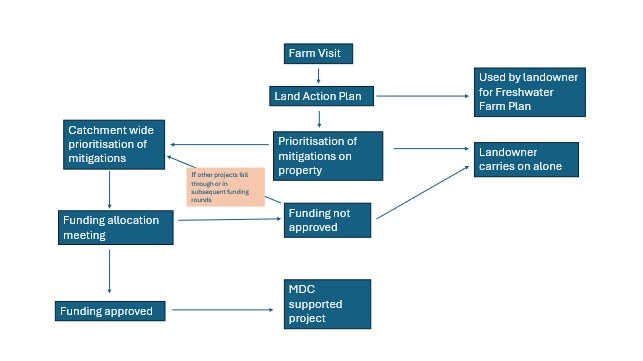
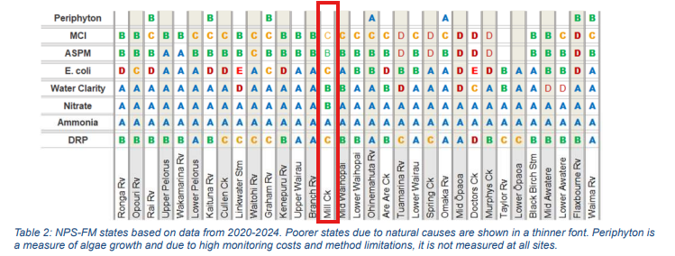
Selection of the focus catchment is based on water quality data and expert opinion. Once the next catchment has been selected, a detailed catchment characterisation study will be undertaken. This will identify key water quality concerns and be used to provide the Catchment Care team and Landowners the information needed to understand what the water quality issues are, and how best to mitigate them.
After the catchment characterisation study is completed, landowners in the catchment will be contacted and a catchment meeting held. This meeting will outline how Council will work collaboratively with landowners to address water quality issues in the catchment.
Catchment Care will then work with landowners that are interested in being involved to create Land Action Plans, which aim to identify, rank and provide information on how to mitigate water quality concerns at a property level.
Actions to mitigate high ranking concerns may be eligible for subsidies.
Go to the Catchment Care tools webpage for Land Action Plan information