

Marlborough students investigate Taylor River health
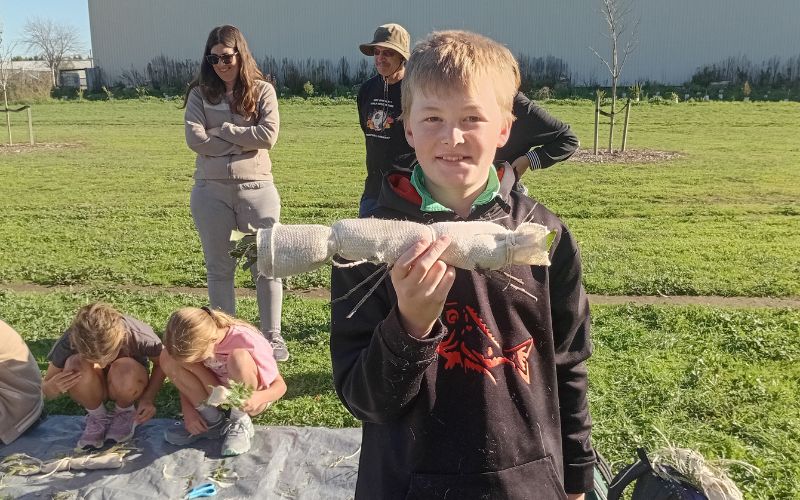
Ned Neal from Rapaura School with his ‘bug bag’, created as part of a freshwater education project with Council Environmental Educator Angela Wentworth
Students from four Marlborough schools rolled up their sleeves and trousers to take part in a hands-on freshwater education project in the Taylor River earlier this term.
Environmental Educator Angela Wentworth alongside Wendy Sullivan from Junior Landcare and volunteers from Forest & Bird guided ākonga, or pupils, as they explored the world of freshwater invertebrates and what they can tell us about stream health.
“The idea of the project was to teach tamariki about freshwater invertebrates and the role they play in keeping our waterways clean. Invertebrates like mayfly nymphs, caddisfly larvae and snails not only play vital roles in the food web, but also help keep the water clean,” Angela said.
“Filter feeders like kākahi, or freshwater mussels, remove fine particles from the water, while shredders like caddisfly and grazers like mayfly help break down leaf litter and control algae.”
After observing the features of a waterway, including gravel beds, shaded banks, riffles, pools and runs, students used their observations to assess the health of the awa.
Tamariki then rotated between two hands-on, creative activities, including designing and making their own bug bags. The aquatic bags, made from hessian and stuffed with dried plant material, provide a habitat for small freshwater invertebrates which in turn support species higher up in the food web, like tuna, or longfin eels.
Students were invited to ‘deploy’ their bags in waterways near their schools and will build a map of where and what type of invertebrates are living in the tributaries of the Taylor River and beyond.
“The information may tell us where to focus our action as well as give schools meaningful data to use across curriculum for maths, science, literacy and arts,” Angela said.
The second hands-on activity, setting up bathy scopes, enabled students to see into the awa, or river using a simple underwater viewing tool, revealing hidden life among stones and plants.
“A big thank you to Junior Landcare and Forest & Bird, alongside school staff and supporting parents for getting behind this project. It was clear from the students’ reflections how much meaningful learning can happen when science is brought to life outdoors,” Angela said.

