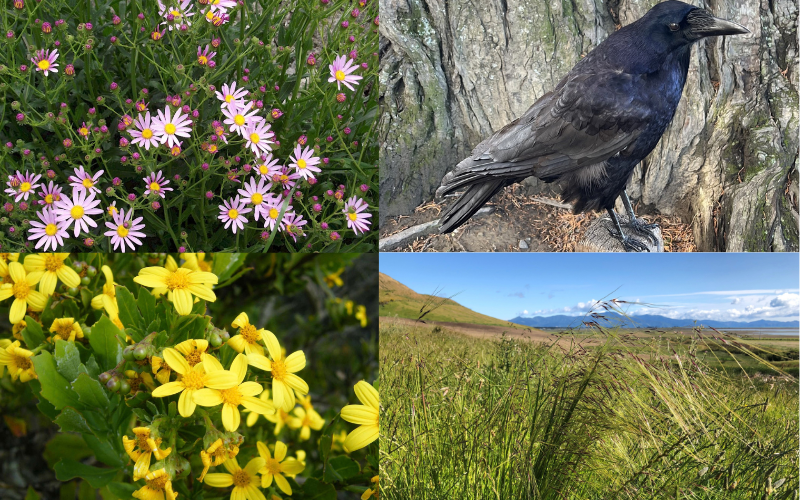
Council is launching a monthly biosecurity communications initiative to help people stay informed and vigilant about pest species threatening our region. Each month, we’ll highlight some priority pests, sharing what to look out for, why they matter and how you can help protect our environment and economy.
This September, be alert for: Chilean needle grass, boneseed, pink ragwort and rooks.
Chilean Needle Grass: the persistent threat to farmland
Chilean needle grass (CNG) remains one of Marlborough’s most challenging pest plants, with infestations in Picton, Wairau, Waihopai, Ward, Awatere, Seddon, and Blenheim. The number of affected properties has increased by 54 over the past five years, now totalling 268.
CNG must be destroyed before it sets seed (typically November–January, although this can extend to May depending on climate and weather conditions). Council’s Biosecurity officers will conduct compliance inspections on properties between November and January to ensure control work has been completed. Council can assist landowners by providing advice on reducing the risk of spread, control methods and a list of suitable contractors who can carry out control work.
Boneseed: a coastal invader in bloom
Boneseed is a perennial shrub or small tree, now flowering bright yellow from September through February. It has smooth, leathery, toothed leaves and produces hard green fruit that ripens to a black seed. Birds eat the seeds and disperse them. It can grow up to three metres tall, forming dense thickets that smother native plants and hinder regeneration. It’s especially invasive on islands, sand dunes, coastal cliffs and disturbed land. Infestations are known in Queen Charlotte Sound, Tory Channel, Rārangi and Lake Timara, with Marlborough’s coastal areas at risk. Early detection and prompt removal are vital. Recent control efforts have reduced boneseed numbers, but continued vigilance is needed - each plant can produce up to 50,000 seeds per year, and seeds may remain dormant for over a decade.
Pink ragwort: striking but dangerous
Now in flower, pink ragwort produces clusters of bright pink or purple daisy-like blossoms with yellow centres from September to November. This upright perennial, up to two metres tall, has light green, toothed leaves and fluffy, wind-borne seeds that spread rapidly. Found on Arapaoa Island but a threat across Marlborough, pink ragwort forms dense stands on pasture, grassland, cliffs and dunes, outcompeting native and beneficial plants. It is also poisonous to livestock, making it a risk to both natural and agricultural systems. Early detection and control are crucial.
Rooks: Keep watch in Grovetown and beyond
Reports of possible rook sightings around Grovetown and Fairhall have prompted a call for vigilance. Rooks are glossy black birds, similar in size to a magpie, with a faint purple sheen. They threaten crops and can quickly become established if undetected. If you spot a rook, please report it directly to Council’s Biosecurity Team - do not try to shoot the birds, as this can make future control harder by dispersing them.
What You Can Do
- Learn to identify these pests
- Report any sightings to the Council’s Biosecurity Team (03 520 7400 or biosecurity@marlborough.govt.nz)
- Don’t attempt to control rooks yourself - contact Council
- For landowners with CNG, please ensure you’re meeting your control obligations
- To find out more about this month’s pest weeds, go to Weedbusters website
Each month, we’ll bring you the latest on pest threats and what you can do to help protect Marlborough’s environment and economy.