


Wairau Aquifer faces growing risks from climate volatility
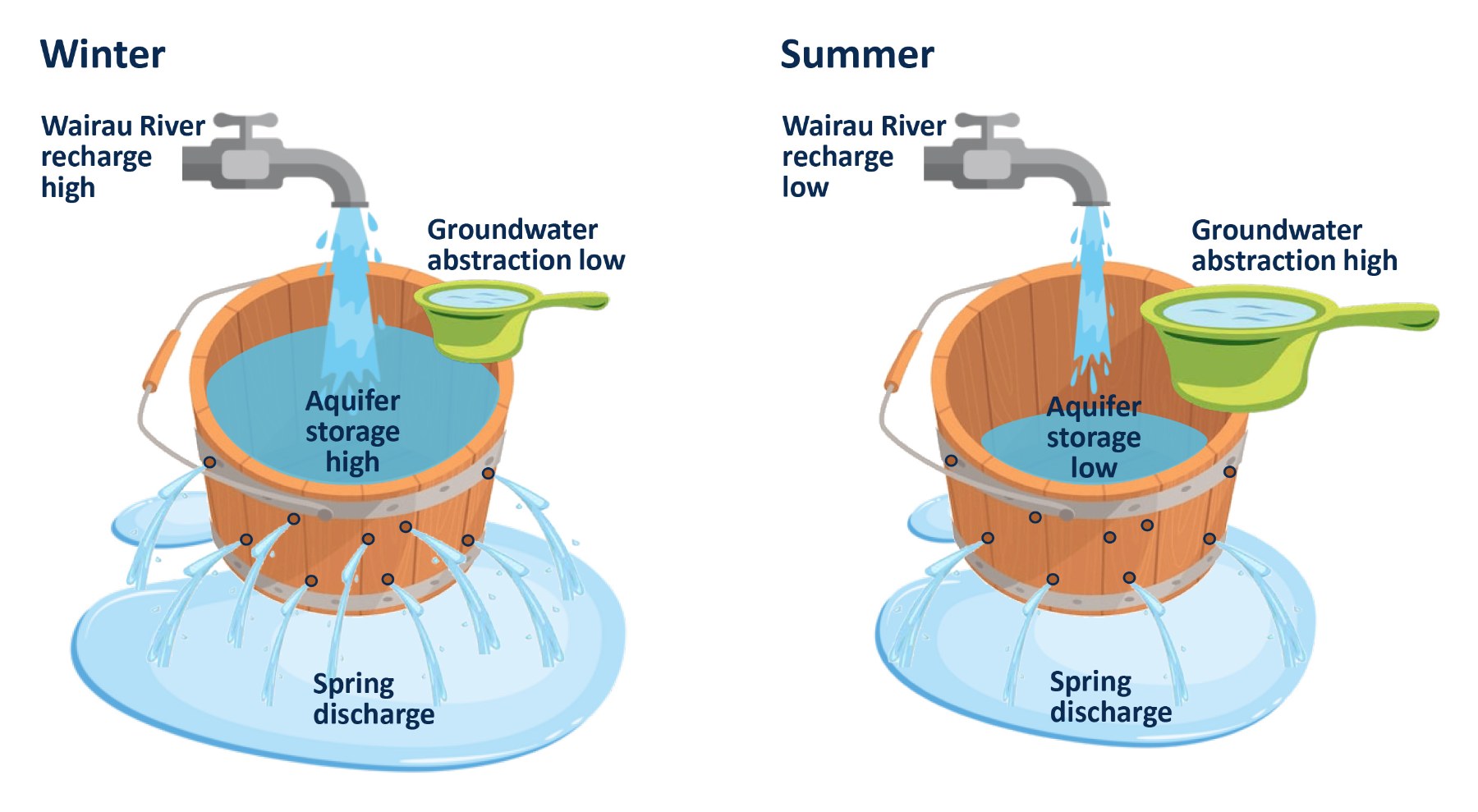
How the Wairau aquifer recharges and discharges
Council’s latest report on the Wairau Aquifer highlights the critical role it plays in sustaining the region’s environment, economy and communities - and the mounting pressures it now faces.
Since 1973, Wairau Aquifer levels have dropped by a metre, a trend that, if allowed to continue, could threaten drinking water supply, crop irrigation and the vibrant spring-fed ecosystems that define the Wairau. The report notes a pattern of increasing volatility: “Since 2021, we’ve recorded both the highest and lowest aquifer levels ever seen,” says Pete Davidson, Senior Groundwater Scientist. “This is climate change in action - more intense weather events on top of a long-term decline driven by reduced river recharge.”
Such extremes have real-world impacts. High water tables can submerge infrastructure and risk cross-contamination, while low levels can shrink springs and reduce well yields. “We’ve seen everything from flooded basements and submerged sewer mains to receding spring flows in recent years,” says Charlotte Tomlinson, Hydrology Scientist. “This volatility is challenging for both our natural systems and the people who depend on them.”
Council is considering management options as part of its Marlborough Environment Plan and floodplain management strategy reviews, including stabilising aquifer levels and reassessing water allocation limits. Computer simulations show that fully utilising the current allocation would further reduce spring flows and amplify seasonal effects.
“Protecting the Wairau Aquifer is fundamental to our region’s future,” Davidson adds. “We need to act decisively as both climate and human pressures intensify.”
To learn more about our region’s aquifers, go to Councils website.

