

Shakespeare Bay shines in latest estuary monitoring
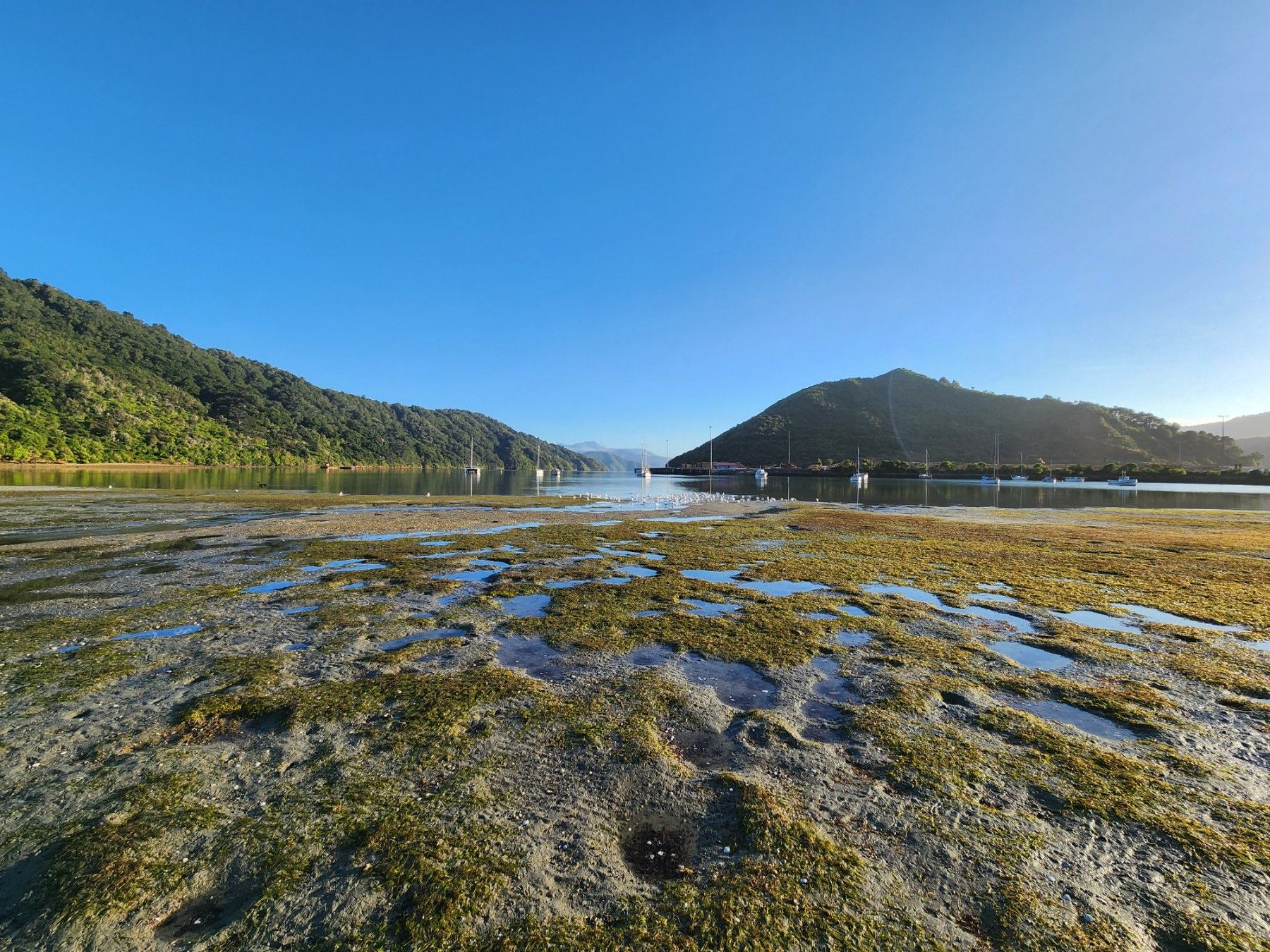
Latest monitoring shows Shakespeare Bay estuary in “very good condition”
Broad-scale habitat mapping reports for Shakespeare Bay, Waitaria Bay, and Waikawa Bay highlight the current state and recent changes in these important estuaries.
The latest State of the Environment monitoring has found Shakespeare Bay in ‘very good’ condition. Since the last survey in 2016, the estuary has seen a significant expansion in seagrass and a reduction in mud-dominated sediments, with limited changes to saltmarsh habitat extent over the past 50 years
By comparison, Waitaria Bay in Te Hoiere/Pelorus Sound and Waikawa Bay in Tōtaranui/Queen Charlotte were rated from ‘fair’ to ‘very poor’.
Waitaria Bay has large areas of muddy sediment and very little seagrass or saltmarsh. Waikawa Bay has been heavily modified, but overall it functions well as a coastal estuary. It has healthy seagrass and its saltmarsh area has increased by 727 per cent after restoration work carried out in 2020.
“These estuaries provide valuable habitat for a range of flora and fauna but they act as a buffer zone between land and sea, so therefore can be highly impacted by human activity and land use in their surrounding catchments,” Council Coastal Scientist Jorgia McMillan said.
The Coastal Science team continues to monitor these and other estuaries to inform management and restoration activities, ensuring Marlborough’s coastal habitats are protected for future generations.
To read the reports, go to Council's website.

